
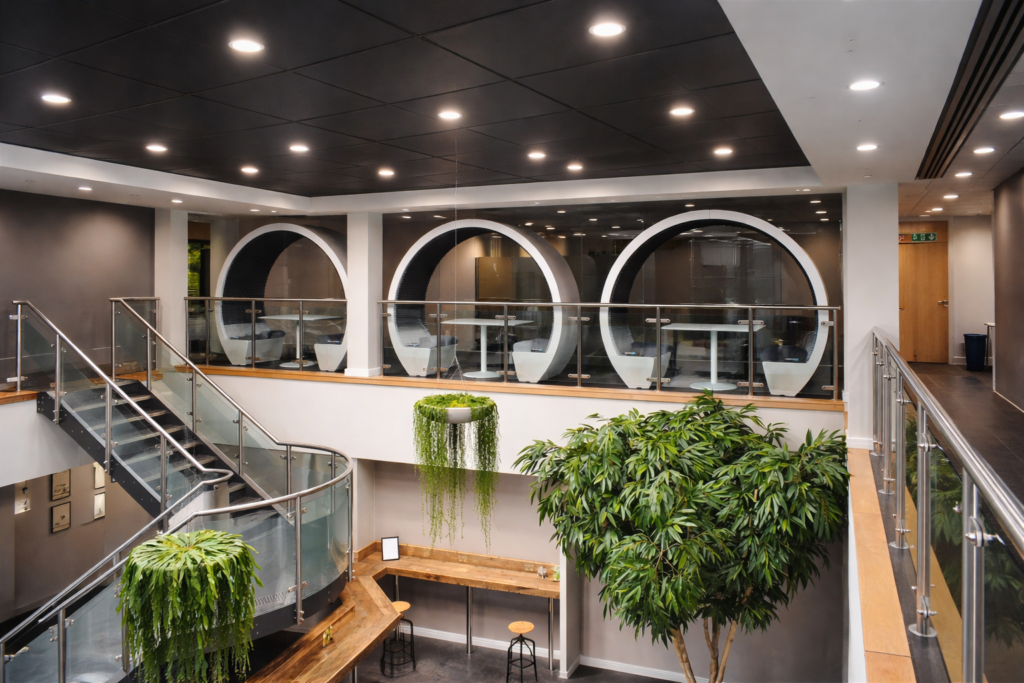
With more businesses encouraging employees back into the office, the open plan office has become a cornerstone of modern workplace design. Favoured for its cost-efficiency and collaborative feel, this layout is widely used across a variety of industries.
However, understanding the open plan office pros and cons – or the wider advantages and disadvantages of open plan offices – is essential for creating a workspace that supports both productivity and employee wellbeing.
The Advantages of Open Plan Offices
There are several reasons why open plan layouts remain popular. When implemented effectively, they can enhance both communication and company culture.
Improved Workplace Collaboration
Open environments make it easier for teams to communicate, ask quick questions, and share ideas. This level of accessibility can significantly boost workplace collaboration, especially in fast-paced environments.
Flexible Office Design
Open layouts are highly adaptable, making them ideal for growing businesses. As teams expand, furniture and layouts can be easily reconfigured – one of the key benefits of flexible office design.
Stronger Team Culture
By removing physical barriers, open plan offices can create a more inclusive and social atmosphere. This can help employees feel more connected, contributing to improved employee wellbeing in the workplace.
Efficient Use of Space
From a practical perspective, open plan environments allow organisations to maximise floor space, making them one of the most cost-effective office layout ideas available.
The Disadvantages of Open Plan Offices
Despite their benefits, there are also clear challenges associated with open plan environments – particularly when it comes to focus and privacy.
Office Noise Distractions
One of the most commonly reported issues is office noise distractions. Conversations, phone calls, and background activity can make it difficult for employees to concentrate.
In fact, a study by Harvard Business School found that face-to-face interactions actually decreased by around 70% in open offices, as employees turned to digital communication to avoid distractions.
Lack of Privacy in the Workplace
Another major drawback is the lack of privacy in the workplace. Without enclosed areas, employees may struggle to take calls or hold sensitive conversations, which can impact both productivity and comfort.
Reduced Productivity
While open spaces are designed for collaboration, they can hinder deep, focused work. Research from University of California, Irvine suggests it can take over 20 minutes to refocus after an interruption – highlighting the impact of constant distractions on office productivity.
Limited Office Meeting Spaces
Many open plan offices lack sufficient office meeting spaces, leading to meetings being held at desks or in unsuitable environments. This can reduce both efficiency and professionalism, particularly for calls or client discussions.
One Size Doesn’t Fit All
It’s important to recognise that not every employee thrives in the same environment. While some enjoy the energy of a busy office, others – particularly introverts or those with neurodiverse needs – may find open environments overwhelming.
Creating a workplace that supports different working styles is essential for improving both engagement and employee wellbeing in the workplace.
Finding the Right Balance with Hybrid Workplace Design
Rather than choosing between fully open or fully enclosed layouts, many organisations are now embracing hybrid workplace design – a more balanced approach that combines collaboration with privacy.
At The Meeting Pod Company, we believe the most effective workplaces offer a variety of environments, including open areas, quiet zones, and dedicated office meeting spaces.
Introducing solutions such as office meeting pods, acoustic office pods, and meeting booths for offices allows businesses to reduce noise, improve privacy, and create spaces for focused work – without the need for permanent structural changes.
The Future of Office Layout Ideas
The future of the workplace lies in flexibility. Businesses are moving away from one-size-fits-all environments and instead exploring smarter office layout ideas that support a range of tasks and working styles.
By understanding the problems with open plan offices and solutions, organisations can make small but impactful changes that significantly improve the overall work environment.
Conclusion
The open plan office remains a valuable part of modern workplace design, but it works best when balanced with spaces for privacy and focus.
By recognising the open plan office pros and cons and introducing more flexible solutions, businesses can create environments that support collaboration, productivity, and wellbeing in equal measure.